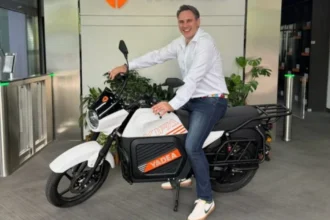
Kenya has entered into a memorandum of understanding (MOU) agreement with Endelevu Enterprise Corporation for a KSh 389.43 billion investment in electric vehicle manufacturing and green mobility.
The agreement between Kenya and Endelevu was signed on Tuesday, October 6, 2026, at State House, Nairobi, Kenya, with President William Ruto presiding over the ceremony. The investment is expected to expand Kenya’s capacity to assemble electric vehicles and develop charging infrastructure and related e-mobility services.
Speaking after the signing of the MOU, President William Ruto said the project would help Kenya rely less on imported finished vehicles by boosting local automotive assembly, adding value to the country, and increasing job opportunities.
In Ruto’s statement, the proposed project includes an assembly plant with the capacity to produce 50,000 four-wheel vehicles annually, including SUVs, sedans, hatchbacks, and vans. A second plant will also be established to manufacture up to 100,000 two-wheelers and light mobility vehicles annually.
The investment will create opportunities for about 2,000 people who will be hired to work at the proposed assembly facilities. It is also expected to create more than 20,000 indirect opportunities for suppliers, logistics firms, and service providers. Lastly, it will create up to 80,000 additional opportunities in fleet management operations and services.
More than 1,000 solar-powered charging stations will be included in the project, together with a digital platform to manage up to 100,000 electric vehicles.
On February 3, 2026, the country launched the National Electric Mobility Policy, which aims to reduce fuel import costs and expand electric transportation. Key provisions included zero-rated VAT and zero per cent excise duty on electric bicycles, motorcycles, buses, and lithium-ion batteries.
During the launch of the policy, Kenya had registered 39,324 electric vehicles by 2025, marking a significant increase compared with the 2022 figures, when the country had registered only 1,378 EVs.